 CN Electronics
Choosing an AC DC switching power supply is a practical decision for modern electronic equipment. These supplies convert alternating current into stable direct current for devices such as control panels, LED systems, communication equipment, and industrial sensors. Their compact size and high efficiency make them valuable where space and energy use matter.
An AC/DC-Switch Mode Power Supply rapidly switches electrical current through power components, transformers, and filters. This design can reduce heat and provide dependable voltage regulation under changing loads. For example, a properly selected 24-volt unit can support a control cabinet without becoming excessively large or heavy. Engineers should still examine output ripple, overload protection, cooling requirements, electromagnetic interference, and expected operating temperature. Small details matter.
Efficiency is important, but it is not the only reason to choose this technology. A reliable power supply should match the equipment’s voltage, current, startup demand, and installation environment. Certification requirements also vary by region and application, so professional review remains necessary. No power supply is perfect. A unit with impressive efficiency may need stronger ventilation, while a quiet model may sacrifice some thermal capacity. That trade-off deserves careful consideration.
In practice, selecting the right AC DC switching power supply requires more than comparing prices or advertised wattage. Check technical data, test performance under realistic loads, and allow suitable safety margins. This approach supports stable operation and reduces avoidable maintenance. It may take longer at the design stage, but dependable power usually justifies the effort.
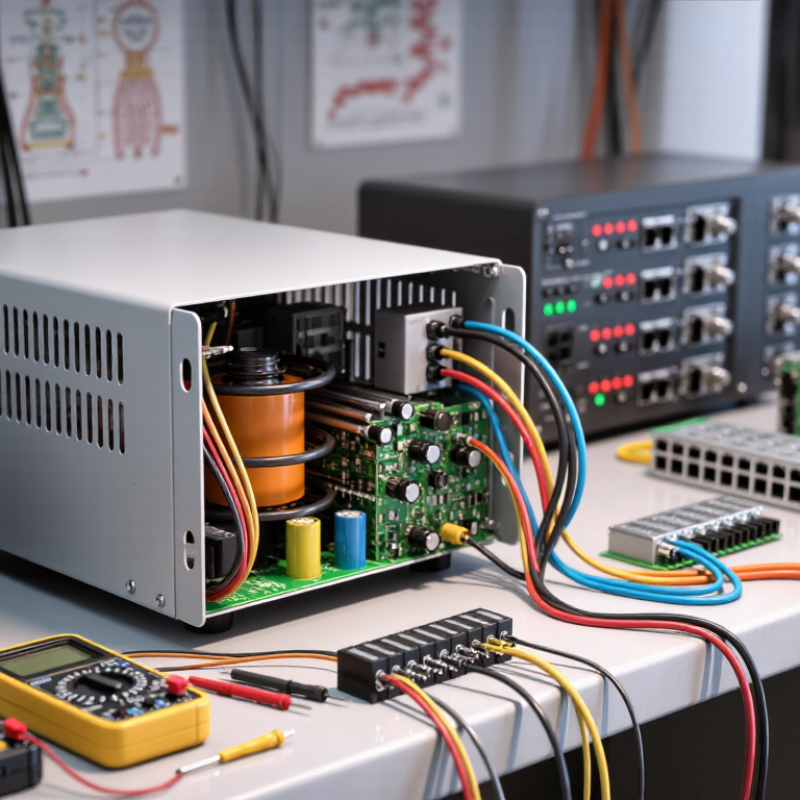
An AC DC switching power supply converts alternating current from a wall outlet into regulated direct current for electronic equipment. Inside, the incoming AC is rectified into DC, then a switching circuit rapidly turns that voltage on and off. A transformer may change the voltage and provide electrical isolation, depending on the design. The output is rectified and filtered again, producing steadier DC. In a compact unit, these stages sit behind a small vented case, often with input and output wires clearly marked. That detail matters. A supply’s label should match the device’s required voltage, current, and polarity.
Unlike a simple linear supply, a switching design controls energy in short pulses, which can reduce heat and size for a given output. It also needs careful filtering and feedback, because switching can create electrical noise. Engineers check ripple, temperature rise, and performance under changing loads rather than trusting the rated number alone. For example, a device that draws extra current when starting may need more headroom than its steady-state rating suggests. The term can sound complicated. The basic idea is not. Still, real designs vary, and not every compact supply is quiet or suitable for every environment. Specifications deserve a closer look.
| Dimension | AC-DC Switching Power Supply | Why It Matters |
|---|---|---|
| What it is | An electronic power converter that takes alternating-current (AC) input and provides regulated direct-current (DC) output. | It lets DC-powered equipment operate from an AC mains supply. |
| Basic conversion process | The input is typically rectified to DC, switched at high frequency, transformed as needed, and rectified and filtered to produce the output. | High-frequency conversion allows the transformer and related components to be smaller than those used in many traditional line-frequency designs. |
| Efficiency | Efficiency varies by design, load, input voltage, and operating conditions. Many modern designs achieve around 80–95% at or near their specified operating range. | Higher efficiency can reduce wasted energy and heat, but the product’s measured specifications should be checked for the intended load. |
| Size and weight | Often compact and relatively lightweight for its output power because it uses high-frequency switching. | Useful where equipment space or weight is limited. |
| Output regulation | Feedback control can keep the DC output within its stated regulation limits as input voltage or load changes. | Stable output helps protect compatible electronics and supports consistent operation. |
| Input range | Some models accept a wide AC input range, while others are designed for a narrower range. The permitted voltage and frequency are specified on the unit or datasheet. | Confirm the input rating matches the local mains supply; a wide-range input should not be assumed for every model. |
| Electrical isolation | Many AC-DC switching supplies provide galvanic isolation between input and output, but isolated and non-isolated designs both exist. | Check the datasheet and applicable safety approvals when isolation is required by the application. |
| Thermal performance | Lower conversion losses can reduce heat generation, although cooling needs depend on power level, enclosure, ambient temperature, and efficiency. | Allow for the manufacturer’s derating and ventilation requirements to help maintain reliable operation. |
| Electrical noise | Switching action can produce conducted and radiated electromagnetic interference; filtering and layout are used to control it. | Review EMC specifications and test the supply in the final system, especially for noise-sensitive equipment. |
| Typical applications | Used in computers, networking equipment, LED systems, industrial controls, consumer electronics, and battery-charging equipment. | Select a supply with the required output voltage, current, power, protection features, and safety approvals for the application. |
It converts wall AC into regulated DC voltage for electronic circuits. The input stage creates a high-voltage DC bus. A switching transistor then sends rapid pulses through a transformer.
Secondary rectifiers and filters smooth the transferred energy. Feedback checks output voltage continuously. It adjusts switching behavior when the load changes.
Check the required voltage, normal current, and startup surge. A 24 V, 3 A load needs 72 W at rated operation. Leave practical headroom for brief peaks.
A supply may perform differently at light, typical, and full load. An oversized unit can waste more energy when lightly loaded. The label alone is not enough.
Check ripple, transient response, isolation, thermal performance, and input range. A motor startup can cause a noticeable voltage dip. That small dip may expose a weak design.
Output capacity can decrease as ambient temperature rises. Poor airflow makes internal components run hotter. Keep vents clear, especially inside a crowded enclosure.
They power network equipment, LED fixtures, control cabinets, desktop devices, and building systems. They also support charging electronics and medical equipment. Requirements differ by application.
Ripple is unwanted variation remaining on the DC output. Measure it under real load conditions. Cable resistance and wiring layout can change the result.
Connector resistance can create voltage drop before power reaches the load. A meter at the supply may show a correct value. The device may still receive less voltage.
No. High efficiency does not guarantee strong cooling or transient performance. I might choose differently after checking real load behavior. Labels simplify a complicated decision.
An AC/DC-Switch Mode Power Supply converts alternating current from a mains source into a stable direct-current output for electronic devices. It typically rectifies the incoming AC, switches the resulting power at high frequency, and regulates the output to meet the needs of the connected equipment. Compared with traditional linear power supplies, switching designs are generally more compact and lightweight, operate more efficiently, and can support a wider range of input voltages.
When choosing a switching power supply, consider the required output voltage and current, total power capacity, efficiency, operating temperature, physical size, and any necessary protection features. Matching these specifications to the application helps ensure reliable performance and avoid overloading. AC/DC switching power supplies are used in a broad range of settings, including industrial equipment, communications systems, consumer electronics, and embedded devices, wherever dependable conversion from AC input to regulated DC power is needed.
