 CN Electronics
Choosing among China’s top AC DC Power Distribution Unit suppliers requires more than comparing prices and product photos. Buyers must examine engineering depth, manufacturing consistency, testing procedures, and after-sales support. An AC/DC-Power Distribution Unit may look simple inside a catalog. In practice, it can manage critical power for servers, telecom cabinets, industrial controls, and renewable energy systems.
This guide introduces practical criteria for evaluating qualified Chinese suppliers. It considers input voltage ranges, output protection, circuit-breaker selection, connector types, enclosure materials, and remote monitoring options. For example, a data center buyer may need dual feeds, alarm contacts, and clearly labeled outlets. A solar project may require different DC ratings, isolation methods, and environmental protection. Small details matter.
Factory evidence matters more than polished marketing. Buyers should request test reports, wiring diagrams, quality records, and sample inspection results. Production capacity should match the required order volume and delivery schedule. Supplier experience with international projects can also reveal communication strengths and weaknesses. Certifications should be checked against the destination market, not accepted blindly.
No supplier is perfect. Some websites provide limited technical data. Some product descriptions leave important ratings unclear. That gap deserves attention. A reliable comparison should include factory audits, sample testing, reference projects, warranty terms, and spare-parts availability. This approach helps engineers, distributors, and procurement teams identify dependable partners for safe and stable power distribution.
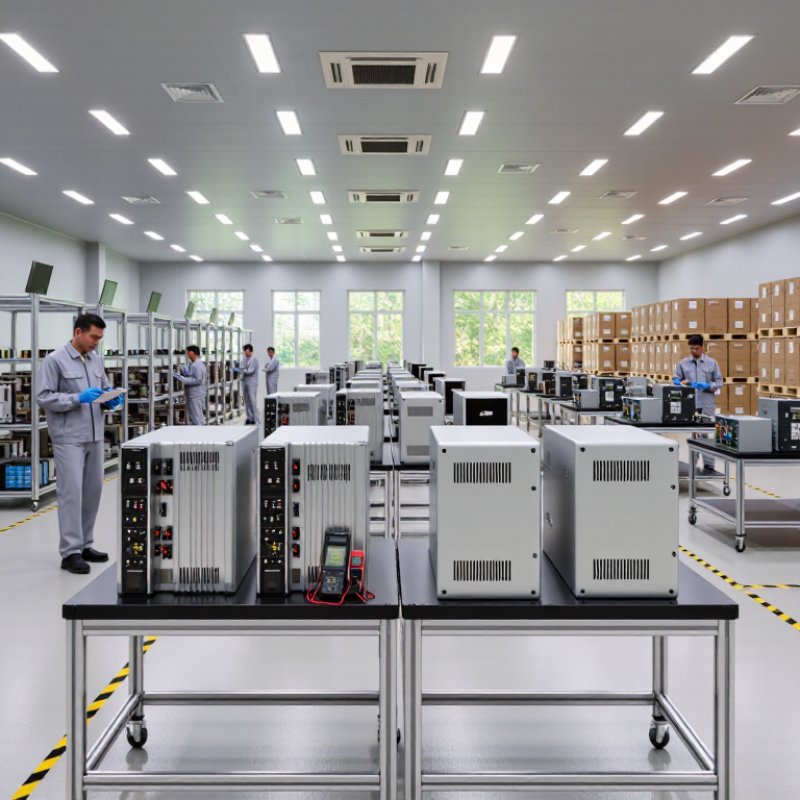
AC and DC power distribution units serve different electrical loads, yet both support controlled and reliable power delivery. An AC PDU distributes alternating current from a facility panel to servers, machines, or laboratory equipment. A DC PDU supplies direct current to telecom devices, control systems, batteries, and electronic assemblies. Each unit may include circuit breakers, fuses, surge protection, metering, and remote alarms.
In a data center, an AC PDU can divide power among rack-mounted servers and cooling equipment. Its meter shows voltage, current, and energy use at the cabinet level. A DC PDU is common in communication rooms, where stable 48-volt distribution reduces conversion stages. Industrial control cabinets also use DC units for sensors, relays, and programmable controllers. Clear labeling matters. One loose connection can create heat, noise, or an unexpected shutdown.
Good selection begins with load type, rated current, voltage range, fault level, and installation space. Engineers should check inrush current, cable temperature, grounding, and maintenance access. Remote monitoring is useful, but it cannot replace physical inspection. I have seen accurate dashboards hide a poorly tightened terminal. That detail is easy to miss. Protection settings must match the connected equipment, not merely the PDU rating. Future expansion should receive attention, although oversized units can increase cost and waste cabinet space. Test records, temperature readings, and alarm history make the equipment easier to trust.
Technical comparison of AC and DC power distribution units based on commonly used electrical configurations, protection functions, installation requirements, and application environments.
| Evaluation Dimension | AC Power Distribution Unit | DC Power Distribution Unit | Function and Application Considerations |
|---|---|---|---|
| Primary Power Type | Alternating current supplied by utility networks, generators, UPS systems, or inverters. | Direct current supplied by batteries, rectifiers, DC power supplies, photovoltaic systems, or fuel-cell systems. | The selected PDU must match the source type, load characteristics, grounding method, and protection scheme. |
| Common Nominal Voltages | 120 V, 208 V, 220–240 V, and 380–415 V AC are commonly used, depending on the electrical system and region. | 12 V, 24 V, and 48 V DC are widely used in control, telecommunications, security, and low-voltage power systems. Higher DC voltages are also used in industrial and energy-storage systems. | Voltage selection affects conductor sizing, insulation requirements, equipment compatibility, and touch-safety measures. |
| Main Distribution Function | Distributes AC power from an incoming source to multiple branch circuits, outlets, equipment feeds, or downstream panels. | Distributes DC power from a rectifier, battery, or DC supply to multiple protected branch circuits or loads. | Both types centralize circuit distribution and simplify isolation, maintenance, and load management. |
| Typical Circuit Protection | Miniature circuit breakers, molded-case circuit breakers, fuses, residual-current protection, and surge protective devices may be used. | DC-rated circuit breakers, fuses, electronic circuit protection, reverse-polarity protection, and surge protection may be used. | AC and DC protective devices are not automatically interchangeable. DC interruption requires equipment specifically rated for the operating voltage and fault current. |
| Switching and Isolation | Uses AC-rated disconnectors, switches, contactors, transfer switches, or circuit breakers. | Uses DC-rated disconnectors, switches, contactors, or circuit breakers designed to extinguish DC arcs. | Visible isolation and lockout capability support safe servicing and compliance with electrical safety procedures. |
| Power Monitoring | May measure voltage, current, frequency, active power, apparent power, power factor, energy consumption, and phase loading. | May measure voltage, current, power, energy consumption, battery-related parameters, and branch-circuit status. | Monitoring enables capacity planning, overload detection, energy management, and preventive maintenance. |
| Remote Management | Advanced units may support network monitoring, outlet-level control, alarm reporting, SNMP, Modbus, or web interfaces. | Advanced units may support network monitoring, branch-level control, alarm reporting, battery-system integration, and industrial communication protocols. | Remote functions are useful where equipment is distributed, unmanned, or installed in restricted-access locations. |
| Output Configuration | May include IEC 60320 outlets, terminal blocks, industrial sockets, busbars, or hardwired feeders. Outlet types vary by region and application. | May include screw terminals, pluggable terminal blocks, busbars, fuse holders, circuit-breaker outputs, or dedicated DC connectors. | Output configuration should reflect load quantity, conductor size, serviceability, polarity requirements, and required ingress protection. |
| Phase Arrangement | Available in single-phase and three-phase configurations. Three-phase systems may use balanced or individually protected branch circuits. | Usually arranged as two-wire DC circuits, with positive and negative conductors. Some systems use a grounded midpoint or separate protective-earth conductor. | Phase balance is relevant to AC systems; polarity, return-path design, and grounding are critical in DC systems. |
| Electrical Efficiency Considerations | Efficiency is influenced by conductor losses, conversion stages, power factor, load balance, and the efficiency of connected equipment. | Can reduce conversion stages in systems using batteries, renewable generation, or DC-native loads, but conductor losses increase as voltage decreases for the same power. | System-level efficiency depends on the complete power chain rather than the PDU alone. |
| Arc and Fault Behavior | AC current naturally passes through zero each cycle, which assists arc interruption by suitable protective devices. | DC current does not have a natural current zero, so switching and fault interruption require appropriately rated devices and carefully designed spacing. | Fault-current level, prospective short-circuit current, and interruption rating must be verified during design. |
| Common Applications | Data centers, server rooms, industrial control panels, commercial buildings, manufacturing lines, laboratories, and telecommunications facilities. | Telecommunications, network equipment, security systems, industrial automation, transportation controls, battery systems, solar installations, and emergency power systems. | Application selection depends on voltage, continuity requirements, environmental conditions, load type, and maintenance strategy. |
| Installation Form Factors | Rack-mounted, wall-mounted, floor-standing, panel-mounted, cabinet-integrated, or modular busbar assemblies. | Rack-mounted, wall-mounted, DIN-rail-mounted, cabinet-integrated, panel-mounted, or modular battery-distribution assemblies. | Mechanical dimensions, mounting method, cable entry, ventilation, and service clearance should be confirmed before installation. |
| Environmental Protection | Indoor units commonly use ventilated or enclosed metal housings. Outdoor or dusty locations may require a higher IP rating, corrosion resistance, and temperature control. | Indoor units commonly use ventilated or enclosed housings. Battery rooms, solar sites, and industrial locations may require enhanced protection against dust, moisture, corrosion, and temperature variation. | Ingress protection should be selected according to IEC 60529 classification and the actual installation environment. |
| Thermal Management | Heat is generated by conductors, breakers, terminals, busbars, surge devices, and monitoring electronics. Ventilation or derating may be required. | Heat is generated by conductors, fuses, breakers, busbars, terminals, and conversion equipment. Low-voltage high-current systems require particular attention to thermal rise. | Continuous current ratings should account for ambient temperature, enclosure size, grouping, ventilation, and duty cycle. |
| Surge Protection | AC surge protective devices can help limit transient overvoltage from lightning, utility switching, or inductive loads. | DC surge protective devices can help limit transients from long cables, photovoltaic arrays, inductive loads, or switching events. | Surge devices must be selected for the correct voltage, system configuration, discharge current, and grounding arrangement. |
| Redundancy Options | Redundant feeds, dual-cord distribution, automatic transfer switches, and separate A/B power paths can improve availability. | Redundant rectifiers, dual battery feeds, parallel DC sources, and separate distribution paths can improve continuity of service. | Redundancy design should consider single points of failure, maintenance procedures, source coordination, and load compatibility. |
| Key Selection Parameters | Nominal voltage, number of phases, rated current, short-circuit rating, outlet type, breaker arrangement, monitoring, enclosure rating, and mounting method. | Nominal voltage, continuous current, polarity, short-circuit current, fuse or breaker type, conductor size, monitoring, enclosure rating, and mounting method. | These parameters should be confirmed using the load schedule, one-line diagram, applicable codes, and installation conditions. |
| Relevant Standards and References | Depending on the product and market, designs may reference IEC 61439 for low-voltage switchgear assemblies, IEC 60529 for enclosure protection, IEC 61643-11 for AC surge protective devices, and applicable national electrical codes. | Depending on the product and market, designs may reference IEC 61439 for low-voltage switchgear assemblies, IEC 60529 for enclosure protection, IEC 61643-31 for photovoltaic DC surge protective devices, and applicable national electrical codes. | Certification and testing requirements vary by product category, installation location, voltage level, and target market. |
| Recommended Supplier Evaluation Criteria | Verify electrical ratings, test documentation, protection coordination, thermal performance, enclosure construction, monitoring functions, customization capability, and after-sales support. | Verify DC interruption ratings, polarity control, fuse or breaker compatibility, short-circuit performance, thermal design, source compatibility, monitoring functions, and service support. | Supplier comparison should be based on documented technical performance and compliance evidence rather than product appearance or nominal current alone. |
Note: Actual ratings, dimensions, protection devices, and compliance requirements must be confirmed from the approved product datasheet, electrical schematic, local regulations, and the final installation design.
Their main strength is flexible production. They can adjust outlets, plugs, cable lengths, breakers, and enclosure sizes. This helps match local electrical standards and cabinet layouts.
Many suppliers offer both AC and DC solutions. However, their protection and testing requirements differ. Confirm the voltage, current, connectors, and operating environment before ordering.
Common checks include load testing, insulation testing, grounding tests, and thermal inspections. Ask for test records. Also review temperature rise and contact resistance data.
Request a sample unit and inspect it closely. Check cable crimping, terminal spacing, labels, enclosure strength, and breaker operation. Photographs can hide weak workmanship.
Ask for technical drawings, wiring diagrams, test reports, quality records, and certification details. Component information should be traceable. Missing documents deserve careful reflection.
Confirm connector types, outlet layouts, monitoring functions, alarm interfaces, communication protocols, packaging, lead time, and spare parts. Written specifications reduce costly misunderstandings.
Review incoming material control, assembly procedures, calibration records, and final inspection. A video audit can still reveal useful details. Look for consistent processes, not one skilled worker.
Not always. Tooling, testing, shipping, and later support may increase the real cost. A lower price can become expensive. Accurate answers matter more than quick replies.
This article explains the role of AC and DC Power Distribution Units in data centers, telecommunications, industrial automation, and other power-sensitive environments. An AC/DC-Power Distribution Unit helps distribute electrical power safely and efficiently, while supporting functions such as circuit protection, load management, monitoring, remote control, and equipment integration. The article also outlines the main criteria for evaluating Chinese PDU suppliers, including product quality, electrical safety, customization capabilities, certifications, manufacturing capacity, testing procedures, delivery reliability, technical support, and total cost of ownership.
It further compares the strengths of leading China-based AC and DC PDU manufacturers without focusing on specific brands. Readers will learn how to assess product design, input and output configurations, monitoring features, environmental adaptability, after-sales service, and communication interfaces. By matching these factors with application requirements, operating conditions, budget, and future expansion plans, buyers can select a dependable Chinese supplier capable of providing secure, scalable, and cost-effective power distribution solutions.
