CN Electronics
The 2026 AC/DC-Battery Charger market is becoming more demanding, not merely larger. Electric vehicles, energy storage systems, forklifts, marine equipment, and backup power units now require different charging profiles. A charger beside a warehouse dock faces dust, vibration, and rushed operators. A residential wall unit faces heat, limited space, and unstable grid conditions.
The International Energy Agency reported more than 14 million electric cars were sold globally in 2023, while public charging points exceeded four million worldwide. Its Global EV Outlook 2024 also highlighted the rapid expansion of fast-charging networks. BloombergNEF’s Electric Vehicle Outlook 2025 showed continued battery-cost pressure, although prices and supply chains remain uneven across regions. These figures matter because charger selection affects battery life, installation cost, charging speed, and operational uptime.
Fatih Birol, Executive Director of the IEA, observed, “The global electric car market is experiencing exponential growth.” His statement describes the demand behind modern charging infrastructure, even if it does not solve every engineering problem. Buyers still need to compare voltage ranges, connector standards, power-factor correction, thermal control, ingress protection, and communication protocols. Small details matter.
Not every high-power charger is the better purchase.
This guide examines the leading 2026 AC/DC-Battery Charger types for global buyers, including onboard chargers, industrial rectifiers, modular DC systems, smart chargers, and bidirectional platforms. It considers performance, safety, serviceability, and regional compatibility. Some market forecasts appear confident. Real projects are less predictable. Weather, maintenance skills, certification requirements, and local electricity quality can change the final decision.
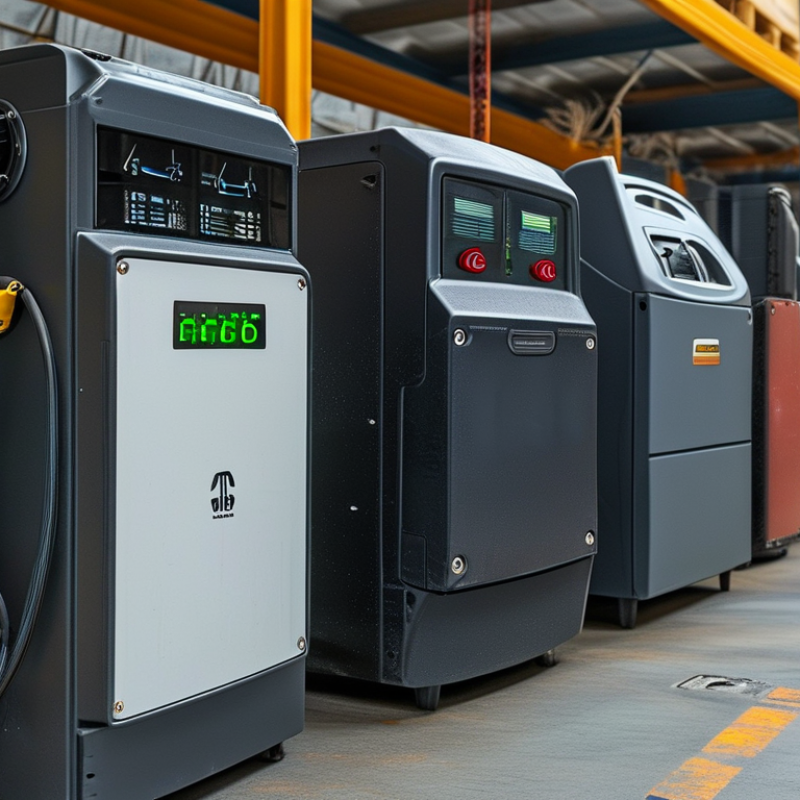
An AC-DC battery charger converts grid electricity into controlled DC power. The input stage usually filters noise, rectifies AC voltage, and creates a high-voltage DC bus. A switching converter then adjusts voltage and current through high-frequency control. Isolation may separate the user from dangerous input voltage. This matters in workshops, vehicles, storage systems, and backup equipment.
Most lithium-based batteries use constant-current and constant-voltage charging. The charger supplies a steady current first, then holds voltage while current gradually falls. A battery management system checks temperature, cell balance, voltage, and charging limits. Poor coordination can create heat, shorten battery life, or stop charging unexpectedly. Small details matter.
2023 The International Energy Agency reported nearly 14 million electric car sales in 2023, showing why dependable charging hardware is becoming more important. Its Global EV Outlook 2024 also identified charging infrastructure as a key condition for wider adoption. Efficiency is another practical concern. Industry testing commonly measures conversion efficiency, standby consumption, power factor, and output ripple. A charger may show excellent peak efficiency, yet perform poorly at light loads. That weakness is easy to miss. Designers should compare thermal behavior, protection response, and real operating curves, not only the headline rating. Testing against relevant IEC safety and electromagnetic-compatibility requirements strengthens buyer confidence, although compliance alone cannot replace careful field evaluation.
2026 Top AC DC Battery Charger Types for Global Buyers
Major AC-DC Battery Charger Types and Their Applications
AC-DC battery chargers convert grid electricity into controlled DC power. Their design determines charging speed, heat, safety, and battery life. Selecting the right type requires matching voltage, chemistry, capacity, and operating conditions.
Linear chargers use simple circuitry and create low electrical noise. They suit small devices, backup systems, and sensitive laboratory equipment. However, they waste more energy as heat. Switch-mode chargers are lighter and more efficient. They support portable tools, mobility equipment, telecommunications systems, and industrial control cabinets. Their higher-frequency operation demands careful electromagnetic compatibility testing.
Multi-stage chargers adjust current and voltage during charging. They are widely used with lead-acid batteries in vehicles, emergency lighting, and renewable energy storage. Smart chargers for lithium-based batteries require accurate voltage control and communication with battery protection systems. A mismatch can cause overheating or shortened service life. It should never be treated as a minor specification.
Isolated chargers separate the AC input from the battery circuit. This feature helps reduce shock risks and ground-loop problems in medical, marine, and industrial applications. Non-isolated models can be smaller and cheaper, but their installation requires more careful system design. Field evaluations should check temperature rise, cable losses, enclosure protection, and standby consumption. No charger is perfect. Even a well-rated unit may perform poorly in dust, vibration, or unstable grid conditions.
| Charger Type | Typical AC Input | Typical DC Output / Power Range | Common Battery Chemistries | Typical Efficiency | Charging Method and Control | Primary Applications | Main Advantages | Key Limitations | Global Buyer Considerations |
|---|---|---|---|---|---|---|---|---|---|
| Linear AC-DC Battery Charger | 100–240 V AC, normally using a transformer and rectifier | 5–30 V DC; approximately 1–100 W | Lead-acid NiMH NiCd Li-ion with dedicated control | Typically 30–60% | Simple constant-current or constant-voltage charging; thermal and overcharge protection may be added | Low-power instruments, legacy equipment, small backup systems, basic consumer devices | Low electrical noise, simple design, easy maintenance, predictable output behavior | Large size, higher heat generation, low efficiency, and limited suitability for high-power systems | Suitable where low noise and low initial cost are more important than energy efficiency or compact size |
| Switch-Mode AC-DC Battery Charger | 90–264 V AC; universal-input designs are common | 5–60 V DC; approximately 10–3,000 W | Li-ion LiFePO4 Lead-acid NiMH | Typically 80–95% | Microcontroller or analog CC/CV charging, programmable current and voltage, multi-stage profiles | Portable electronics, industrial tools, telecom backup, mobility equipment, home energy storage | Compact, lightweight, efficient, and adaptable to different battery voltage and capacity requirements | More complex design, possible electromagnetic interference, and greater dependence on control electronics | Check efficiency at the required load, electromagnetic compatibility, cooling method, and battery-profile flexibility |
| Isolated Flyback Charger | 85–264 V AC | 5–48 V DC; approximately 3–150 W | Li-ion LiFePO4 Lead-acid | Typically 70–90% | Primary-side or secondary-side regulation with constant-current and constant-voltage control | Wall-mounted adapters, small medical devices, smart sensors, emergency lighting, handheld equipment | Provides galvanic isolation in a compact and economical design; suitable for low-to-medium power | Transformer stress and switching losses increase at higher power; output ripple may require filtering | Verify reinforced or basic isolation requirements, creepage and clearance, standby power, and output ripple |
| Isolated Forward or Half-Bridge Charger | 85–264 V AC; three-phase input may be used for higher power | 12–150 V DC; approximately 100–3,000 W | Lead-acid Li-ion LiFePO4 NiMH | Typically 85–95% | Closed-loop CC/CV control, programmable multi-stage charging, temperature compensation, current limiting | Industrial battery cabinets, telecom systems, laboratory equipment, robotics, mobility systems | Electrical isolation, good transient response, higher power capability, and reliable regulation | Higher component count, larger magnetic components, and increased design and certification cost | Evaluate isolation rating, cooling, service access, input power factor, and compatibility with continuous-duty operation |
| Power-Factor-Corrected AC-DC Charger | 85–264 V AC; single-phase or three-phase | 24–800 V DC; approximately 500 W–20 kW | Li-ion LiFePO4 Lead-acid Nickel-based | Typically 90–98% | Active power-factor correction followed by isolated or non-isolated DC conversion and battery-specific CC/CV control | Industrial energy storage, electric mobility, data-center backup, telecom power, commercial charging systems | Lower input harmonic distortion, improved grid utilization, high efficiency, and scalable power architecture | More expensive and complex; requires careful thermal, electromagnetic, and control design | Confirm power-factor requirements, total harmonic distortion limits, grid voltage, three-phase compatibility, and certification needs |
| Programmable Multi-Stage Charger | 90–264 V AC or dedicated industrial AC input | 12–800 V DC; approximately 100 W–30 kW | Lead-acid Li-ion LiFePO4 NiMH | Typically 85–97% | Bulk, absorption, float, equalization, pre-charge, constant-current, constant-voltage, and end-of-charge stages | Fleet equipment, industrial vehicles, renewable-energy storage, battery testing, service workshops | Supports different battery capacities, adjustable charge curves, data logging, and system integration | Requires accurate battery parameters and configuration; incorrect settings can reduce battery life or create safety risks | Prioritize programmable voltage/current limits, communication interfaces, firmware controls, and password protection |
| Lead-Acid Float and Standby Charger | 100–240 V AC or industrial AC input | 12, 24, 48, 110, or 220 V DC; approximately 50 W–10 kW | VRLA AGM Gel Flooded lead-acid | Typically 80–95% | Constant-current bulk charging followed by absorption and temperature-compensated float charging | UPS systems, emergency lighting, fire and security systems, telecom backup, substation control systems | Designed for continuous standby service, stable float voltage, battery monitoring, and long operating life | Generally unsuitable for lithium batteries without a dedicated lithium charging profile and safety controls | Check float voltage accuracy, temperature compensation, reverse-polarity protection, alarm outputs, and battery autonomy requirements |
| Lithium Battery Charger with BMS Interface | 90–264 V AC; high-power systems may use three-phase AC | 12–1,000 V DC; approximately 50 W–100 kW | Li-ion LiFePO4 Lithium-titanate | Typically 88–97% | Controlled CC/CV charging with cell-voltage, temperature, state-of-charge, and fault communication through the BMS | Electric vehicles, battery energy storage, robotics, portable power stations, industrial mobility equipment | Accurate charging, enhanced protection, battery diagnostics, thermal-event mitigation, and improved cycle life | Requires protocol compatibility, correct cell configuration, and coordinated charger-BMS safety logic | Confirm battery chemistry, series-cell count, maximum charge voltage, CAN or other communication protocol, and required safety standards |
| Modular Rack-Mounted AC-DC Charger | 90–264 V AC; 380–480 V AC or three-phase input for larger systems | 24–800 V DC; approximately 1–100 kW per system | Li-ion LiFePO4 Lead-acid | Typically 90–97% | Parallel power modules with load sharing, hot-swap capability, digital monitoring, and configurable battery profiles | Data centers, telecom networks, industrial automation, microgrids, centralized energy-storage systems | Scalable capacity, redundancy, simplified maintenance, flexible installation, and improved system availability | Higher system cost, rack-space requirements, communication complexity, and possible single-point control dependencies | Assess N+1 redundancy, module replacement time, rack dimensions, airflow direction, remote monitoring, and service support |
| Regenerative AC-DC Battery Charger | 85–264 V AC or industrial three-phase AC | 24–800 V DC; approximately 1–100 kW | Li-ion LiFePO4 Lead-acid | Typically 90–97% in charging mode | Bidirectional power conversion; can return braking or discharge energy to the AC grid or a local DC bus | Automated guided vehicles, electric transport, test benches, industrial drives, battery cycling systems | Reduces energy waste, supports battery testing, and enables bidirectional energy management | Higher control and protection complexity; grid interconnection requirements may apply | Check bidirectional power rating, grid synchronization, anti-islanding protection, regenerative energy limits, and harmonics |
| Outdoor and Harsh-Environment AC-DC Charger | 90–264 V AC; optional industrial or three-phase input | 12–800 V DC; approximately 100 W–30 kW | Li-ion LiFePO4 Lead-acid | Typically 85–96% | Standard CC/CV or programmable charging with thermal derating, surge protection, and environmental monitoring | Outdoor telecom, solar-storage systems, marine equipment, construction machinery, transport infrastructure | Protection against dust, moisture, vibration, temperature variation, and electrical surges | Enclosure, sealing, thermal management, and corrosion protection can increase weight and cost | Review IP rating, operating temperature, altitude, salt-mist resistance, vibration rating, cable glands, and installation method |
When comparing AC DC battery chargers for global purchasing, start with the input range. A unit marked 100–240 VAC supports wider grid conditions. Check the frequency range too, especially for mixed markets. Output voltage must match the battery chemistry and charging stage. A charger for a 24-volt system should not be judged by current alone.
Look at charging performance in practical terms. Constant-current and constant-voltage control should transition smoothly near the target voltage. Output current, rated power, efficiency, and ripple voltage reveal more than a headline charging speed. Lower ripple can reduce stress on sensitive battery systems. Thermal behavior matters as well. A charger running at 70°C inside a compact enclosure may derate quickly. Airflow changes everything.
Protection details deserve careful reading. Overvoltage, short-circuit, over-temperature, and reverse-polarity protection improve field reliability. Check operating temperature, humidity limits, connector size, cable length, and enclosure protection. I once prioritized maximum output current and overlooked standby consumption. That decision looked efficient on paper, but the charger became warm during long idle periods. A neat specification sheet can still mislead. Request test data, not only nominal values. Verify charging results with a meter and a controlled battery load before placing a large order.
Key specifications for comparing charger performance
Indicative technical ranges: linear chargers, single-stage switching chargers, multi-stage smart chargers, and industrial modular isolated chargers. Verify the final rating against the applicable regional safety and EMC requirements.
Global buyers choosing AC DC battery chargers in 2026 must match electrical design with local requirements. A charger rated for 100–240V AC and 50/60Hz offers broad compatibility. However, input range alone does not prove safe operation. Confirm output voltage, charging current, polarity, isolation, and battery chemistry. Lithium, lead-acid, and nickel-based batteries require different charging controls. A mismatch may cause overheating or shortened battery life.
Safety certification depends on the destination market and product category. Buyers should review IEC 60335-2-29 where applicable, plus relevant EMC and insulation requirements. Regional marks may include CE, UKCA, UL, CSA, PSE, or RCM. These marks are not interchangeable. Certification documents should show the exact model, rated input, output range, and factory location. Field checks often reveal an uncomfortable gap: a supplier may provide a certificate, but not for the purchased configuration. That detail needs careful verification.
Tips: Request test reports before placing a large order. Check plug type, grounding, fuse design, and leakage current. Test the charger at low and high line voltage. Leave ventilation space around the enclosure. Also inspect labels in the destination language. A small label error can delay customs clearance. Standards change, and this is easy to underestimate. Consult an accredited testing body when market access remains uncertain.
International buyers need more than a high charging current. The correct AC DC battery charger must match the battery chemistry, voltage range, capacity, and operating environment. AC-input chargers suit workshops and facilities with stable grid power. DC-input chargers fit vehicles, solar systems, backup units, and mobile equipment. Smart chargers add temperature sensing, multi-stage charging, and automatic shutdown. These features can protect batteries during long charging cycles.
Confirm the input frequency and plug requirements before comparing prices. A charger designed for one grid standard may perform poorly elsewhere. Check output tolerance, connector design, enclosure rating, cooling method, and noise level.
For outdoor use, dust and moisture protection matter. For fleet operations, programmable profiles and communication interfaces can reduce service time. Request test reports, user manuals, and warranty conditions from the supplier. Practical evidence is stronger than a polished specification sheet. No selection method is perfect.
Tips: Write down the battery model, chemistry, voltage, and Ah rating first. Check the charger at low and high temperatures. Compare real charging time, not only rated current. Ask whether replacement parts are available locally. Leave safety margin. A slightly oversized charger may be unsuitable without proper current control. Pilot testing is wise, although it adds time and cost.
C/DC battery charger support?
Match output voltage with the battery system and charging stage. A 24-volt battery system needs compatible voltage control. Check the battery chemistry, polarity, and charging current. Different chemistries need different charging methods.
Review output current, rated power, efficiency, and ripple voltage. Constant-current and constant-voltage changes should feel smooth. Lower ripple may reduce stress on sensitive battery systems. Headline charging speed can mislead.
A charger inside a compact enclosure may reach 70°C. High temperature can cause automatic power reduction. Leave clear ventilation space around the enclosure. Airflow changes the result.
Look for overvoltage, short-circuit, over-temperature, and reverse-polarity protection. Also check insulation, grounding, fuse design, and leakage current. Small details matter.
Documents should match the exact purchased model and configuration. They should show input ratings, output range, and production location. Regional approval requirements are not interchangeable. A certificate for another configuration is not enough.
Request test reports, not only nominal specification sheets. Test the charger at low and high line voltage. Use a meter and a controlled battery load. Check charging behavior over time. I once trusted the sheet too quickly.
Confirm the plug type, connector size, cable length, and enclosure protection. Inspect labels in the destination language. A small label error may delay customs clearance. This risk is easy to underestimate.
This guide explains the fundamentals and operating principles of an AC/DC-Battery Charger, including how it converts alternating current into controlled direct current for safely charging different battery chemistries and capacities. It reviews major charger types, such as standard, smart, multi-stage, fast, portable, and industrial models, while highlighting suitable applications in residential, commercial, transportation, backup-power, and specialized equipment environments.
It also outlines the key specifications international buyers should compare, including output voltage, charging current, efficiency, charging profiles, protection functions, operating temperature, connector design, and service life. Because electrical systems differ worldwide, the guide emphasizes input-voltage compatibility, frequency requirements, safety features, electromagnetic performance, and relevant regional certifications. Finally, it provides a practical selection approach based on battery requirements, charging speed, installation conditions, portability, environmental demands, total cost, and long-term reliability, helping buyers choose a safe and effective charger type for global use.
